Meet Dr. Lila Landowski
Dr. Lila Landowski is a neuroscientist dedicated to spreading knowledge about the human brain
“Our brain arrives into this world unfinished – a little bit like a smartphone before you’ve downloaded all the apps. But that might actually be why it’s so incredible!
It’s been built to learn and adapt. Think of things like crocodiles: they swim, make sounds and feed from the moment they crack their way out of an egg.
We’re the opposite. We come into the world as a clean slate and rather than being pre-programmed to survive one environment, our brain develops in response to this changing world around us –
learning from things like danger or stress or relationships – and it is continually shaped by our experiences and things like social media and AI.
It keeps changing throughout our lives. There’s so much we are still learning about the brain, and I love sharing that knowledge with as many people as I can.” – Dr Lila Landowski
Notable Achievements
Through her PhD research, Lila identified a therapeutic candidate with the capacity to a) regenerate nerves in an animal model of peripheral neuropathy and b) specifically direct the growth of neurons.
Dr Lila Landowski is an established thought leader in STEM and STEM advocacy, with honorary titles including “Superstar of STEM,” “Patron of Science,” “Public School Education Ambassador” and “Science Superhero.”
Lila is a Fides health ambassador for the World Health Organisation, an international network of 100+ health professionals that release scientifically reliable content, and amplifying the WHO’s goals of combatting health misinformation
Her TEDx Talk titled “Brain Hack: 6 secrets to learning faster, backed by neuroscience” is the 3rd most viewed TEDx video in the world since its’ release.
Major awards include the Australian Museum Eureka Prize for Promoting Understanding of Science (2026), being the Young Achiever of the Year (2014), an Australian Institute of Policy & Science Young Tall Poppy award winner (2018) and an ABC TOP 5 Science Scholar (2018), a finalist for the Australian Museum Eureka Award for Promoting Understanding of Science (2022), and a state finalist for Young Australian of the Year (2015). She received two of the University of Tasmania’s highest honors, Vice Chancellors citations, for teaching and community engagement in 2018.
She is an avid advocate for scientific research, with current roles as a Board Director (and former Vice President) of Science and Technology Australia, and Executive Director of the Australian Brain Alliance (the Australian contingent of the International Brain Initiative). As a former Director of the Australian Society for Medical Research, she transformed social media presence and image, and increased social media following by an average of 71% across platforms within a year. As an Executive Director of the Australian Society for Medical Research she created a national campaign to raise awareness for Australian health and medical research, and assisted in preparing submissions to parliament regarding health and medical research budgets and policy, and writing to the ANAO to request an audit of the medical research future fund.
Dr Lila Landowski is a passionate advocate for careers in STEM, and is dedicated to breaking down barriers, challenging stereotypes and inspiring the next generation of scientists. She has also mentored many people across diverse career paths. She believes that you can’t be what you can’t see, and strives to make science more visible, relatable and inclusive through public and online talks and school visits.
She has directly reached over 31,000 school students from prep to year 12 in over 766 schools across Australia, through talks about neuroscience and careers (online and in person). Her advocacy is driven by a belief that scientific talent and potential is everywhere, but opportunity isn’t always equal, and that empowering more people, including women and girls to pursue STEM careers isn’t just about fairness; it’s essential to building a stronger, more innovative future.
Her viral video of neurons connecting in a petri dish titled “Finding that connection” reached over 600 million viewers* across Tiktok, Twitter, Facebook, Instagram, Reddit etc, and has been incorporated into textbooks, teaching tools, training videos and even proposed for use in art exhibitions (Prada Foundation, Venice). *The true reach of this video is unknown, as it is often shared without attribution
She is a regular guest expert for ABC radio, and reaches a wider audience through TV shows such as House of Wellness, ABC News, The Project, The Drum, as well as across countless podcasts. She elevates the voices of other researchers and clinicians through organising radio segments “Your Weekly Dose of Medicine” (weekly, ABC Radio Hobart Drive program) and “Science Club” (fortnightly, ABC Radio Hobart afternoons program).
Her social media following @rockatscientist has a growing following of >150,000 across social media platforms, reaching 40,000-1,000,000 per month.
Dr Lila Landowski was named one of Australia’s top 20 under 40 scientists in 2022 (Herald Sun/The Age/Daily Telegraph) and one of Australia’s top 100 scientists in 2023 (ABC Science Show).
As a highly sought after keynote speaker and consultant, Lila brings value to organisations by coaching staff and leadership around the newest evidence in neuroscience on the topics of personal growth, resilience, stress, learning and leadership.
See below for:
Honorary Titles
Awards
Full biography


Honorary Titles
National Science Week Ambassador, 2026-present
– Inspiring Australia
Fides Health Ambassador, 2024-present
– World Health Organisation
Tasmanian Women’s Honour Roll inductee, 2025
– Tasmanian Government
Superstar of STEM, 2021 – present
– Science and Technology Australia
Patron of Science, 2019-2022
– Elizabeth College
Public Education Ambassador, 2018
– Department of Education Tasmania
Science Superhero, 2018
– Office of Australia’s Chief Scientist, Alan Finkel
Research focus
Dr Lila Landowski’s past work spans multiple areas of neuroscience, including axon guidance, neural repair mechanisms, therapeutic development for nerve damage, stroke, dementia, nanotechnology and fatigue.
Public engagement
As a dedicated science communicator, Dr. Landowski shares her passion for the brain through school visits, media appearances, public talks, and her upcoming books to inspire the next generation of scientists.
Advocacy and Leadership
Dr Lila Landowski actively lifts the voices of other researchers and clinicians, and advocates for the health and medical research sector.
Awards (chronological)
Eureka Award Winner, 2026
Celestino Award for Promoting Understanding of Science
Australian Museum
Australian of the Year (TAS nominee), 2026
Australian of the Year Awards,
National Australia Day Council
Hall of Fame Inductee, 2026
Hobart High School
Tasmanian Women’s Honour Roll inductee, 2025
Tasmanian Government
Eureka Award, FInalist 2023, 2025
Celestino Award for Promoting Understanding of Science
Australian Museum
Top 100 Scientists, 2023
ABC Science Show with Robyn WIlliams
Australian Broadcasting Corporation
Top 20 Scientists Under 40, 2022
Herald Sun
John Lane Orator, 2022
Australasian Society for Aerospace Medicine
Governance Foundations for Not-for-Profit Directors scholarship, 2022
Australian Scholarships Foundation
Engagement Award,
College of Health and Medicine, 2022
University of Tasmania
Alumni Award, 2021
Elizabeth College
Top 5 Science scholar, 2019
ABC Radio National
Australian Broadcasting Corporation
Science Communicator of the Year, 2019
Tasmanian STEM Excellence awards
Elizabethan Award, 2019
Elizabeth College
Young Tall Poppy Award, 2018
Australian Institute of Policy and Science
Vice Chancellor’s citation
Early Career Academic Teaching, 2018
University of Tasmania
Vice Chancellor’s citation
Outstanding Community Engagement, 2018
University of Tasmania
Young Australian of the Year (finalist, TAS), 2016
Australian of the Year Awards,
National Australia Day Council
Premier’s Young Achiever of the Year, 2015
Young Achiever’s Awards
St Luke’s Health & Wellbeing Award Winner, 2015
Young Achiever’s Awards
Teaching Merit Certificate, 2015 & 2016
University of Tasmania
Young Achiever’s Career Kickstart Award Winner, 2014
Young Achiever’s Awards
Travel Award, 2010, 2011, 2014
Australian Neuroscience Society
“Seize the day” Award, 2012
Cancer Council
Dako Immunohistochemistry Postgraduate Research Bursary, 2012
Dako
Graduate Research Candidate Conference Travel award, 2012
University of Tasmania
Science & Technology Young Achiever Award,
Semi-finalist 2011
Young Achiever’s Awards
Student Excellence Awards
State finalist, 2011
AusBiotech-GlaxoSmithKline
Australian Postgraduate Award 2010 – 2013
Australian Federal Government
Honours Scholarship, 2009
Menzies Research Institute
Commonwealth University Scholarship, 2009
Australian Federal Government
SDA Education Scholarship 2008, 2009
SDA
Certificate of Excellence, 2005
University of Tasmania
Dux of Environmental Science, 2005
Elizabeth College
Dux of Natural Sciences, 2005
Elizabeth College
Extended Biography
Early Years – Professional Life – Scientific Advocacy
Dr. Lila Landowski is a multi-award winning science communicator, Australian neuroscientist and senior lecturer at the University of Tasmania, Director/past Vice President of Science and Technology Australia, and Execitive DIrector of the Australian Brain Alliance. She is a regular guest expert science communicator for the Australian Broadcasting Corporation (ABC), a keynote speaker at Saxton Speakers, and a Fides health ambassador for the World Health Organisation. Her research spanned various areas including stroke, nanotechnology, and nerve regeneration, and she has taught in diverse fields such as medicine, nursing, biotechnology, pharmacy and science over the last 15+ years.
Coming from a disadvantaged and marginalised background, Lila’s broader life story exemplifies determination, resilience and overcoming the odds.
EARLY YEARS:
Dr Lila Landowski’s journey into medical research began with an unlikely encounter: a slimy fish on a school camp.
Growing up in Hobart, Tasmania, Australia, Lila loved exploring nature, catching lizards and fish, and asking questions about the world around her. In Grade 4, on a school camp, she caught her very first fish. As she held the slippery, slime-covered fish in her hands, she began to wonder about the substances produced by animals that might help people.
Inspired by stories she’d heard about the supposed health benefits of fish oil and shark cartilage extract, she made an instant decision about her future: when she grew up, she wanted to discover a fish extract that could be turned into medicine.
That childhood curiosity sparked a lifelong passion for medical research, eventually leading her to become a neuroscientist investigating how to repair damaged nerves and develop new treatments for neurological conditions.
Her story is a reminder that a career in science doesn’t always begin in a laboratory. Sometimes, it begins with a curious child, a big question and a very slimy fish.
Dr Lila Landowski’s journey into science communication began with watching Sir David Attenborough.
She dreamed of becoming a scientist, but she didn’t know any scientists, didn’t have mentors and had little idea what a career in research actually looked like. She didn’t go to the “right” school, or have connections with the “right” kind of people. In fact, the only person she knew who seemed remotely like a scientist was David Attenborough, who she watched on television.
So, naturally, she assumed that if she wanted to become a scientist, she’d have to learn how to speak in public.
There was just one problem: she was terrified of public speaking.
Determined to overcome her fear, Lila auditioned for her school’s debating team in Grade 7. She was rejected. She tried again the following year and was rejected again. Eventually, enough students dropped out that she made it onto the team from the bottom of the reserve list.
Rather than giving up, Lila continued deliberately putting herself in uncomfortable situations, gradually transforming one of her greatest fears into one of her strengths.
Lila eventually becomes Dr Lila Landowski.
A neuroscientist. An educator. A multi award winning science communicator.
She mentors. She lifts others up. She desperately wants you to succeed because she sees your potential.
She stands on stages explaining the human brain to thousands of people, helping people understand learning, stress and neuroplasticity.
She becomes fierce. Independent. Capable.
She builds a life around curiosity, service to others, and the belief that complicated things can be understood if somebody bothers to explain them properly.
What began as an attempt to emulate her childhood hero became a passion for making science accessible to everyone. From her early radio segments on ABC Hobart to TV shows, internationally viral science videos, a TEDx talk watched by millions and ultimately winning the Australian Museum’s 2026 Eureka Prize for Promoting Understanding of Science, Lila has built a career translating complex scientific discoveries into knowledge that can change lives.
PROFESSIONAL LIFE:
For Dr Lila Landowski, one of her earliest scientific discoveries was a remarkable case of childhood curiosity coming full circle.
As a young girl, Lila had dreamed of discovering a substance in fish that could be used to develop new medicines. Years later, during her PhD in neuroscience at the Menzies Research Institute, she made an exciting breakthrough: discovering that a naturally occurring protein called metallothionein 2A could help guide the growth of nerve fibres and accelerate nerve regeneration. In laboratory studies, Lila demonstrated that the protein could regenerate nerves in the skin in just 7 days, in an animal model. The discovery offered exciting possibilities for developing future treatments for nerve injuries and conditions that cause nerve damage, such as diabetic neuropathy and chemotherapy-induced neuropathy (although its effectiveness in humans remains untested). At this time, Lila became acutely aware of the precariousness of medical research funding – watching a slow exodus of Australia’s best and brightest scientists. This inspired her path into scientific advocacy (more on that below).
And perhaps the most extraordinary part of the story? The protein she discovered regenerates nerves in skin, also exists in fish. The little girl who had once held a slimy fish on a school camp and wondered whether nature might hold the secrets to healing had grown up to become a scientist uncovering those very secrets.
As a neuroscientist, Lila’s research expertise is in axon guidance, neural repair mechanisms, therapeutic development for nerve damage, dementia, stroke, nanotechnology and fatigue. In 2014, after completing her PhD at the Menzies Research Institute Tasmania (AUS), Lila trained at the Peripheral Nerve lab at the Mayo Clinic (MA, USA) to cement her status as an emerging leader in the field of peripheral nerve injury. She was recruited to teach and coordinate neuroscience units at the Wicking Dementia Centre (AUS) at the same time. In recent years, her research focus has shifted from peripheral neuropathy to stroke and fatigue. From 2018-2021 Lila was a postdoctoral research fellow in neuroplasticity in the lab of Professor David Howells at the University of Tasmania (AUS) and a visiting scholar at the Florey Institute’s Melbourne Brain Centre (Austin Hospital, Melbourne, AUS), including visits to Oxford University (UK). With the support of an investment from the Royal Hobart Hospital Research Foundation, her foremost research goal was to transform the success of preclinical stroke research.
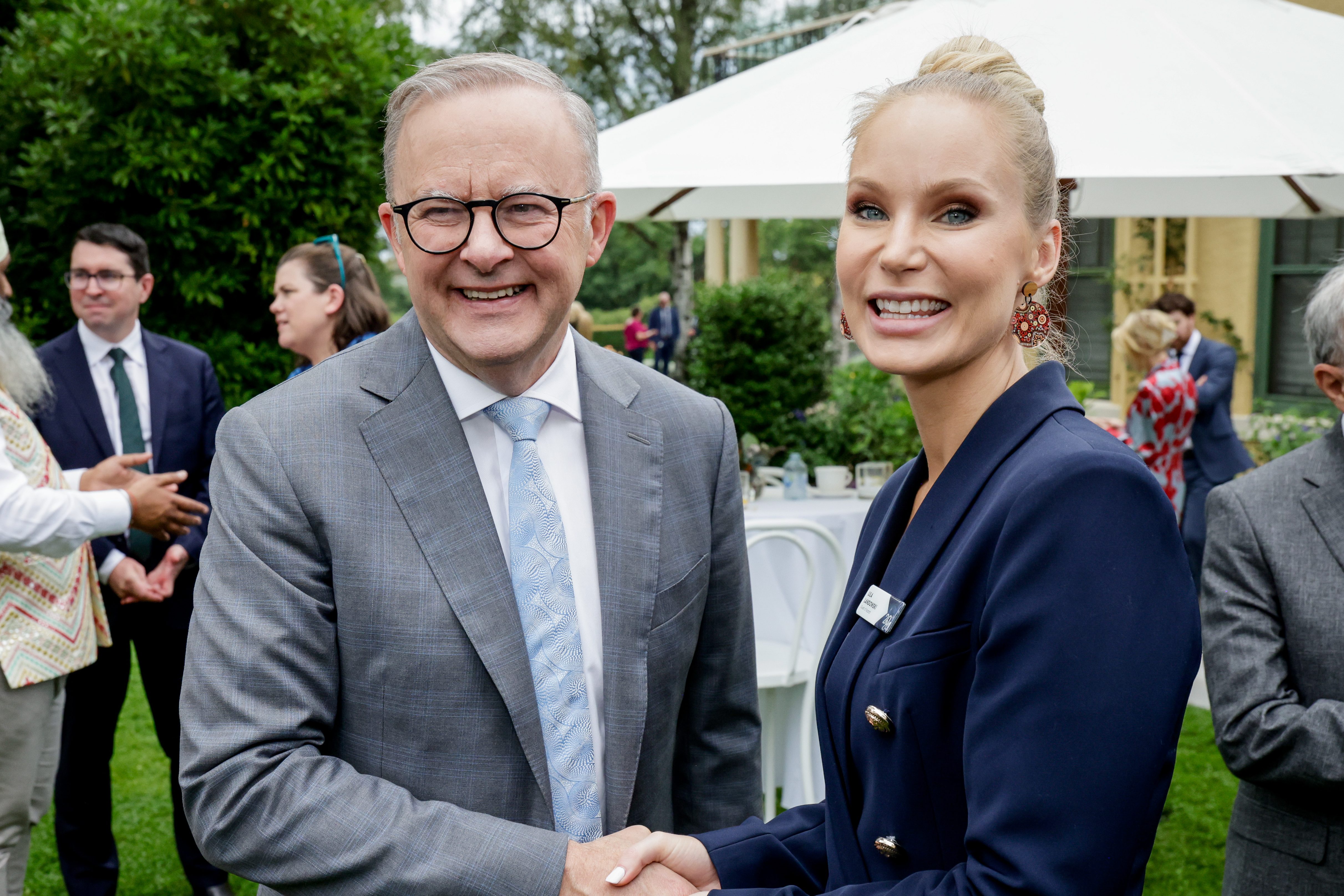
Lila has a strong personal focus on community health and wellbeing, making the wonderful world of science more accessible to the community through radio, podcasts, TV, public talks and in print and digital media. With hundreds of millions of social media views and a regular radio presence, she distils complex topics for the public. As a Fides member for the World Health Organisation, Lila shares scientifically reliable content, which is critical in an age where misinformation spreads rapidly online. She’s even been invited to Parliament House to meet with Australian Prime Minister Anthony Albanese and Communications Minister Anika Wells (alongside passionate 12-year-old student Flossie Brodribb and her mother Romany), to discuss the neuroscience of social media’s impact on young brains ahead of Australia’s under-16s social media ban.
As leading voice in STEM and advocacy, Lila holds honorary titles such as “Superstar of STEM,” and National Science Week Ambassador, and has been an ambassador for public school education for the Tasmanian Department of Education, a Patron of Science for Elizabeth College, and was named a “Science superhero” by Australia’s then-Chief Scientist, Alan Finkel. She was also inducted into the Tasmanian Honour Roll of Women (2025), recognised for service to science, education, community, advocacy and inclusion.
Dr Lila Landowski is a passionate advocate for careers in STEM, and is dedicated to breaking down barriers, challenging stereotypes and inspiring the next generation of scientists. She has also mentored many people across diverse career paths. She believes that you can’t be what you can’t see, and strives to make science more visible, relatable and inclusive through public and online talks and school visits.
She has directly reached over 31,000 school students from prep to year 12 in over 766 schools across Australia, through talks about neuroscience and careers (online and in person). Her advocacy is driven by a belief that scientific talent and potential is everywhere, but opportunity isn’t always equal, and that empowering more people, including women and girls, to pursue STEM careers isn’t just about fairness; it’s essential to building a stronger, more innovative future.
As an educator, Lila has taught across the across the Bachelor of Medicine, Dementia Care, Medical Research, Biotechnology, Pharmacy, Nursing, Paramedicine, Medical Research and Science; as well as the Masters of Medical Research and Dementia Care. She has received multiple University of Tasmania citations, the University’s highest award honour, including Vice-Chancellor’s citations recognising teaching and community engagement.
Drawing on her expertise as an educator and neuroscientist, Lila’s 2023 TEDx Talk, Brain Hack: 6 Secrets to Learning Faster, Backed by Neuroscience, quickly became one of the most popular TEDx talks in the world. Her first book, Focus for Dummies (Wiley) will be available in early 2027, and promises to bring her signature warmth, wit, and evidence-based insight to one of the most pressing challenges of modern life: how to focus in a world designed to fracture our attention. A second book has also been in the pipeline for almost 5 years, with details to be announced soon.
As a consultant and keynote speaker, Lila has worked with ASX50 and Fortune 500 companies to help embed neuroscience into everyday practice and enhance their competitive edge.
Dr Lila Landowski is committed to amplifying the voices of her colleagues in the research and medical community, promoting their work and knowledge to the media and ensuring their contributions are recognised, valued, and supported. Lila believes that by elevating these voices, she can also help raise societal interest and appreciation of medical research, and thus secure the stable and sustainable funding needed to keep Australia at the forefront of innovation.
SCIENTIFIC ADVOCACY:
Dr Lila Landowski’s passion for science advocacy was born from witnessing some of Australia’s brightest scientific minds being forced to make an impossible choice due to lack of research funding: abandon the research they had dedicated their lives to, or leave the country to pursue it. Others retired prematurely, and most left research altogether, taking their extraordinary expertise, potential and ideas with them. She also felt this keenly through her own struggles to fund research.
For Lila, the human cost is heartbreaking, but the economic consequences are equally alarming.
Australia invests decades and millions of dollars educating and training world-class scientists. But what happens when we fail to invest in keeping them?
What is the untold economic cost of losing the discoveries they might have made, the industries they could have created and the lives their research might have saved? And what does this steady erosion of scientific expertise mean for Australia’s sovereign research capability? When the next global health crisis arrives, who will be left to solve it?
Today’s scientific discoveries are the foundations of tomorrow’s innovations, preventions and cures. Without sustained investment in research and the people who make it possible, Australia risks sacrificing not only its scientific future, but its health, prosperity and national resilience.
These concerns inspired Lila to take her advocacy beyond the laboratory and into the national conversation. This includes leadership through roles such as Director (2023 – present) and Vice President (2024 – 2025) of Science and Technology Australia; Executive Director of the Australian Brain Alliance (2026-present), the Australian Society for Medical Research (Director and Executive Director, 2018-2023); Director of Epilepsy Tasmania (2018-2023), as well as through various communications roles for the Australasian Neuroscience Society (2015-present). This is work is all done on a voluntary basis. She champions for greater investment in research, stronger career pathways for scientists and policies that recognise research as an investment in Australia’s future, rather than an expense. She has been involved in numerous awareness campaigns, including the #AdvanceAustraliaCare campaign she developed and implemented during her time as Director of the Australian Society of Medical Research, as well as the 2026 Australian Academy of Science‘s Restore Science campaign calling for greater research investment.
Because when we lose a scientist, we don’t just lose their expertise. We lose the discoveries they haven’t made, the problems they haven’t solved and the futures they might have changed.

